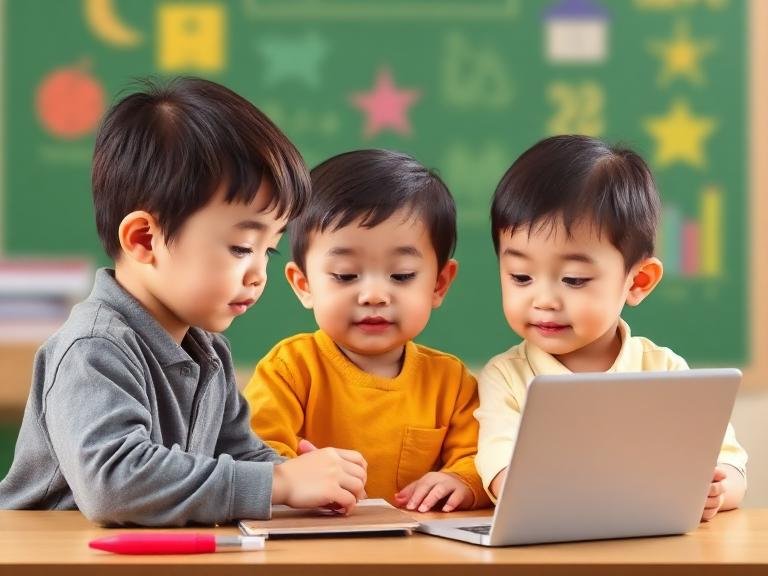
Children today are growing up in a world where artificial intelligence is becoming part of everyday life. From voice assistants and personalized learning apps to smart search tools and creative platforms, AI is already shaping how people learn, work, communicate, and create.
For parents and educators, this does not mean every child needs to become a programmer or an AI engineer. The more important goal is to help children understand what AI is, how it works, and how they can use it thoughtfully.
Learning about AI for kids can encourage curiosity, creativity, problem-solving, and digital confidence. When introduced in an age-appropriate way, AI can become less of a mysterious technology and more of a useful tool that children learn to question, understand, and use responsibly.
Platforms such as KidzoAI can also help introduce children to AI concepts and digital learning in a more engaging and accessible way.
Why AI Skills Matter for Children
Artificial intelligence is no longer something that belongs only in science fiction movies or advanced technology companies. AI-powered systems are increasingly present in education, healthcare, entertainment, transportation, and many other areas.
As children grow older, they are likely to encounter AI in both school and future careers. Understanding the basics can help them become more confident users of technology rather than simply passive consumers.
Teaching AI for kids is also about developing skills that go beyond technology. Children can learn how to ask better questions, evaluate information, solve problems, think creatively, and understand the importance of responsible decision-making.
The goal is not to place more pressure on children. Instead, it is about preparing them to navigate a digital world with awareness and confidence.
1. Understanding What AI Is and What It Is Not
One of the first AI skills every child should learn is a simple understanding of what artificial intelligence actually does.
Children do not need complex technical explanations. They can begin by learning that AI systems are created by people and use data and patterns to perform certain tasks. Some AI tools can recognize images, answer questions, recommend videos, generate text, or help organize information.
At the same time, children should understand what AI is not.
AI does not think or feel in exactly the same way humans do. It does not automatically know what is right, true, or appropriate. AI-generated answers can sometimes be inaccurate or incomplete.
This basic understanding can help children approach technology with curiosity rather than blindly trusting everything it produces.
A Simple Way to Explain AI
Parents and teachers can compare AI to a very advanced pattern-recognition tool. It learns from large amounts of information and uses patterns to generate responses or predictions.
This explanation can make AI for kids easier to understand without overwhelming them with technical details.
2. Learning How to Ask Better Questions
One of the most valuable skills children can develop when using AI is learning how to ask clear questions.
The quality of an answer often depends on the quality of the question. Instead of asking something broad like, “Tell me about space,” a child might ask:
- Why do planets orbit the Sun?
- Explain black holes in a way a 10-year-old can understand.
- Give me three interesting facts about Mars.
- Help me create a quiz about the solar system.
This encourages children to think about what they actually want to know.
Learning to ask better questions also supports communication and critical thinking. These skills are useful far beyond AI tools and can benefit children in school, conversations, research, and future careers.
3. Critical Thinking and Fact-Checking
Perhaps one of the most important skills connected to AI is critical thinking.
Children should understand that not everything they see online or receive from an AI tool is automatically correct. AI can generate useful information, but it can also make mistakes.
Teaching children to pause and ask questions such as these can make a big difference:
- Where did this information come from?
- Does this answer make sense?
- Can I check this using another reliable source?
- Is there another perspective?
- Could this information be outdated?
These habits can help children become smarter and more responsible digital citizens.
When teaching AI for kids, the goal should not be to create fear around technology. Instead, children should learn that AI is a helpful assistant, not a replacement for their own thinking.
4. Creativity and Using AI as a Learning Partner
AI can also open new opportunities for creativity.
Children can use appropriate AI tools to brainstorm story ideas, create characters, explore science topics, practice languages, or come up with project ideas. A child who enjoys storytelling might use AI to generate a few ideas and then create their own unique story.
The important lesson is that AI should support creativity rather than replace it.
For example, a child can ask an AI tool to suggest five ideas for a comic book. They can then choose one idea, change the characters, create their own plot, and develop the final story themselves.
This approach teaches children that AI can be a starting point, but human imagination is still essential.
Encourage Children to Add Their Own Ideas
Instead of accepting the first answer generated by an AI tool, children can learn to ask:
- Can I make this idea better?
- What would I change?
- Can I add my own personality to it?
- Is there another way to solve this problem?
These questions help turn AI into a creative partner rather than a shortcut.
5. Basic Problem-Solving Skills
AI can be useful for helping children break down complicated problems into smaller steps.
For example, a child working on a science project could use AI to understand a difficult concept, create a project outline, or generate questions for further research.
However, children should still learn how to work through problems independently.
A healthy approach is to encourage them to try first and then use AI for guidance if they get stuck.
This can teach an important lesson: technology can support learning, but real understanding comes from thinking, practicing, and exploring.
Problem-solving is also one of the most future-ready skills children can develop. Whether they become artists, scientists, teachers, entrepreneurs, or engineers, the ability to approach challenges creatively will remain valuable.
6. Digital Safety and Privacy Awareness
As children spend more time using digital tools, they also need to understand basic online safety.
When learning about AI, children should be taught not to share sensitive personal information with unfamiliar platforms or tools. This may include details such as passwords, home addresses, financial information, or other private data.
They should also understand that online tools should be used carefully and with guidance appropriate to their age.
Parents and educators can create simple rules around AI use, such as:
- Do not share private information.
- Ask an adult before using a new platform.
- Do not believe every answer without checking.
- Be respectful when interacting online.
- Use AI to learn and create, not to harm or mislead others.
Teaching digital responsibility alongside AI for kids helps children build healthy technology habits from an early age.
7. Understanding Bias and Fairness
As children get older, they can begin learning that AI systems are created using human-made data and decisions.
This means that AI is not always completely neutral.
For example, if an AI system is trained using incomplete or unbalanced information, its results may also reflect those limitations.
Children do not need a highly technical lesson on algorithms to understand the basic idea of fairness. They can start by discussing questions such as:
- Can technology make mistakes?
- Can information be unfair?
- Who creates AI systems?
- Why is it important to include different perspectives?
These conversations encourage children to think beyond simply using technology. They begin to understand that people have a responsibility to design and use AI carefully.
8. Basic Coding and Computational Thinking
Not every child needs to become an expert programmer, but basic coding and computational thinking can be extremely useful.
Computational thinking involves breaking a problem into smaller parts, identifying patterns, and creating step-by-step solutions.
These skills can be developed through coding games, puzzles, robotics activities, and simple digital projects.
For children interested in technology, coding can also provide a deeper understanding of how digital systems work.
When combined with AI education, these activities can help children move from simply using technology to understanding how it is created.
This is one of the reasons why early exposure to AI for kids can be valuable. It introduces children to the idea that technology is not just something they consume. It is something they can understand, question, and potentially create.
9. Responsible Use of AI
Children should also learn that having access to a powerful tool comes with responsibility.
For students, this may mean understanding the difference between using AI to learn and using it to complete all of their work without understanding it.
For example, AI can help explain a difficult math concept. But simply copying an answer without learning how it was reached does not build real knowledge.
Parents and teachers can encourage children to use AI in ways that support learning.
A simple rule can be:
Use AI to help you think, not to avoid thinking.
This mindset can help children develop a healthier relationship with technology.
How Parents and Teachers Can Introduce AI to Children
Introducing AI does not have to involve complicated lessons.
A good starting point is to connect AI with topics children already enjoy. If they love space, animals, stories, games, or art, AI can be used to explore those interests.
Parents and teachers can encourage children to experiment by asking questions, comparing answers, checking facts, and creating small projects.
It is also helpful to learn alongside them.
You do not need to be an AI expert to have meaningful conversations. Simply asking, “What do you think about this answer?” or “How could we check if this is true?” can create valuable learning opportunities.
Educational resources such as KidzoAI‘s learning platform can be useful starting points for introducing AI concepts to younger learners in a more approachable way.
The Future of AI for Kids
AI will continue to evolve, and children will likely encounter new tools that do not even exist today.
That is why the most important skill may not be learning how to use one specific AI platform. Instead, children need adaptable skills such as curiosity, critical thinking, creativity, communication, and responsible decision-making.
Technology will change, but these abilities will remain useful.
Teaching AI for kids is ultimately about preparing children for a future where they can interact with technology confidently without becoming overly dependent on it.
The children who are best prepared for the digital age may not be those who know the most tools. They may be the ones who know when to use technology, when to question it, and when to rely on their own judgment.
Final Thoughts
Artificial intelligence is becoming an increasingly important part of everyday life, and children deserve the opportunity to understand it.
By learning basic AI concepts, asking better questions, checking information, protecting privacy, thinking creatively, and using technology responsibly, children can develop skills that will support them for years to come.
The purpose of teaching AI for kids is not to rush childhood or turn every child into a technology expert. It is to give young learners the confidence and awareness they need to grow up in a rapidly changing digital world.
With the right guidance, AI can become more than just another screen-based tool. It can encourage children to explore, imagine, question, and discover new ways of learning.
Frequently Asked Questions
1. What is the best age for children to start learning about AI?
Children can begin learning simple AI concepts at an age-appropriate level whenever they are ready to understand how digital tools work. Younger children can explore basic ideas, while older children can learn more about coding, data, and responsible AI use.
2. Why is AI for kids important?
AI for kids is important because artificial intelligence is becoming part of education, work, and everyday life. Learning about it can help children develop digital literacy, critical thinking, creativity, and responsible technology habits.
3. Do children need coding skills to learn AI?
No. Children can learn many AI concepts without coding. However, basic coding and computational thinking can help interested learners understand how technology and digital systems work.
4. How can parents teach children to use AI safely?
Parents can teach children not to share private information, to verify important information, to ask before using unfamiliar tools, and to use AI as a learning assistant rather than blindly trusting every response.
5. Can AI help children learn and be creative?
Yes. When used thoughtfully, AI can help children explore topics, brainstorm ideas, practice skills, and develop creative projects. The best approach is to encourage children to add their own thinking and creativity rather than simply copying AI-generated content.